
What Is Legal AI?
Legal AI is a technology designed to simplify and speed up legal work. It’s not meant to replace lawyers. These are tools that legal professionals need to handle repetitive tasks more efficiently.
For instance, it can review contracts in minutes, spotting errors, missing clauses, or potential risks that might take a person much longer to catch. It can also help with legal research, finding relevant case laws or statutes quickly without endless hours of manual searching.
What makes it so useful is how consistent it is. It doesn’t get tired or miss details, which can be a huge help when you’re dealing with complex or high-volume work.
Whether it’s processing massive amounts of documents for litigation, analyzing data, or drafting common contracts and agreements, legal AI handles the groundwork so legal practitioners can focus on their expertise, like giving advice, building strategies, or solving client problems.
But “legal AI technology” is such a broad term. Let’s talk about the different types of tools that make it what it is.
Types of AI Technology in the Legal Industry
AI isn’t just made for the legal industry, but a lot of its technologies work really well for legal tasks. Whether it’s tools built just for lawyers or general AI that can make things easier, there are a bunch of ways AI is helping out.
Here’s a quick look at some of the most common types of AI being used in legal work:
1. Natural Language Processing (NLP)
Natural language processing is what helps AI tools make sense of human language, even the complex and technical terms often used in legal documents.
It’s the backbone of many legal AI tools, which allows them to act like a virtual legal assistant that can speed up routine tasks and reduce manual effort across various areas of legal practice.
With NLP, legal professionals can:
- Extract important clauses, dates, or terms from lengthy contracts
- Summarize case law, legal opinions, or statutes in a way that’s easy to understand
- Answer legal questions using plain language, making research faster and less tedious
- Identify inconsistencies or risky clauses in documents
This technology plays a critical role in how legal professionals manage large volumes of text-based information efficiently.
By automating routine tasks, NLP supports a smoother legal practice. In turn, this can allow teams to focus on strategy and client needs rather than spending hours combing through documents manually.
2. Machine Learning
Machine learning is what gives AI its edge. Instead of just following static rules, it learns from real legal data. Over time, it gets better at spotting patterns, making predictions, and flagging anything out of the ordinary.
So what does that mean for you? It means less time second-guessing and more time making confident, informed decisions. Imagine knowing ahead of time whether a clause might raise red flags or having a heads-up on how a case might play out based on similar ones.
This kind of smart automation adds another layer of insight to your decision-making. In a field where small details can have big consequences, that kind of support can make a serious difference.
3. Generative AI
Generative AI learns from existing data and uses that knowledge to create new, original content. In the legal landscape, this opens up some seriously powerful possibilities.
Need to draft a contract or legal brief? Generative AI can create a solid first draft in a fraction of the time by pulling from relevant clauses, past cases, and standard legal language.
It doesn’t stop at drafting. Generative AI can also break down complex legal jargon into plain, readable language. That’s a big win when client expectations are shifting toward clarity and transparency. When you make legal documents more accessible, you can meet client demands in a way that feels modern and responsive.
That said, we’re still in the early days. AI capabilities are evolving quickly, but legal professionals should always review and verify AI-generated outputs. Think of generative AI as a tool that speeds things up and helps you hit the mark, but it’s your expertise that brings it across the finish line.
4. Predictive Analytics
Predictive analytics revolves around using data to make smart guesses about what might happen next.
For litigators, it can predict how a case might play out in court, which makes it easier to decide if it’s worth settling or going all the way. challenges
It’s also super handy for spotting legal risks early, especially in compliance, so you can deal with issues before they get out of hand. Basically, it gives lawyers a clearer picture of what to expect so they can make better calls and stay ahead of problems.
5. Document Automation
Document automation makes creating legal documents like contracts, NDAs, and settlement agreements faster and easier.
Instead of drafting everything from scratch, you can use pre-built templates that handle the repetitive stuff for you. It’s a lifesaver for law firms or teams dealing with tons of paperwork.
Here’s how it helps:
- Drafts common legal documents in minutes
- Fills in names, dates, and other details automatically to cut down on errors
- Lets you tweak or customize documents when needed
- Handles large volumes without slowing anyone down
- Keeps everything up-to-date and compliant
With document automation, lawyers get accurate, professional documents in less time, which leaves them more room to focus on their clients and bigger-picture tasks.
6. AI Contract Review
Reading through contracts line by line can take up a lot of time, and it’s easy to overlook details when you have a full plate. AI contract review helps by scanning documents quickly and pointing out errors, missing clauses, or anything that seems unusual.
It can also check if terms match your company’s policies, so you don’t have to double-check everything manually. If you’re dealing with a steady flow of contracts like vendor agreements or client deals, this kind of tool can really lighten the load.
You save time, make fewer mistakes, and free yourself up to focus on the parts of the contract that actually need your attention.
7. Legal Chatbots
Legal chatbots are AI-powered tools that can chat with users, answer legal questions, and guide them through simple processes. They’re designed to be easy to use, even for people who aren’t familiar with legal language.
You’ve probably seen them in action on consumer-facing platforms. They help with small claims, tenant issues, or basic legal rights. But now, law firms are putting them to work behind the scenes, too.
Many firms use chatbots during client intake to gather key details, answer common questions, and save the team valuable time. They help streamline those first interactions so attorneys can jump in with everything they need already in place.
Chatbots can:
- Help users understand basic legal rights in plain language
- Guide individuals through filing documents, like small claims or visa applications
- Collect information during client intake, streamlining the onboarding process
- Provide answers to frequently asked questions, reducing workload for legal teams
Of course, chatbots aren’t meant to replace human legal services, but they can take care of all the repetitive questions and routine communications.
8. AI-Powered Legal Research Tools
AI-powered legal research tools take the hassle out of digging through endless databases to find case law, statutes, or precedents. Instead of manually scrolling through page after page, these tools quickly deliver accurate, relevant results based on your query.
What makes them even more useful is their ability to understand questions phrased in everyday language. You don’t need to write a perfectly worded legal prompt. Just ask what you need, and the system pulls out the key facts and most relevant materials for you.
Let’s say you’re prepping for a matter involving breach of contract. Rather than combing through dozens of court decisions manually, an AI tool can scan thousands of cases, identify the ones most relevant to your scenario, and even highlight how certain precedents apply.
Whether you’re part of a lean in-house team or coordinating with outside counsel, these tools help keep you in the driver’s seat. They cut down on repetitive searches, surface the details that matter, and give you a faster path to answers.

9. Electronic Discovery
E-discovery focuses on finding and organizing digital information for legal projects, such as litigation or subpoenas. With so much evidence in emails, text messages, and other files, manually reviewing everything can take forever.
AI tools make the process faster by searching for specific keywords, file types, or patterns and filtering out irrelevant data. They’re especially helpful for lawsuits or investigations that involve large amounts of information.
What Are The Benefits of Adopting AI-Powered Legal Tech?
The benefits of AI might be somewhat apparent to you by now. However, to be able to invest in something, you should know what you’re getting back.
So, we’ve compiled some of the best reasons why integrating AI into your legal workflows is worth it:
AI Can Help You Save Time
One of the biggest advantages of AI-powered legal tech is the time savings. Tasks like contract review, legal research, or analyzing case data that once took hours (or even days) can now be completed in minutes.
These tools are designed to sift through massive amounts of information quickly and efficiently while pinpointing exactly what legal teams need. This means less time spent on repetitive, manual work and more time focused on strategy, client discussions, and high-value tasks.
Here’s how AI tools save time:
- Analyze contracts in minutes, identifying risks, missing clauses, and inconsistencies
- Quickly search legal databases to find relevant case law or statutes
- Extract key information from large volumes of documents without manual effort
- Automate tasks like drafting standard agreements, saving hours of work
- Process e-discovery data faster, sorting relevant files from unnecessary ones
With AI handling the tedious parts, legal professionals can focus on the work that truly requires their expertise.
You Can Improve Accuracy
Mistakes are easy to make when deadlines are tight and the workload keeps growing. Early adopters rely on AI to handle detail-heavy tasks with consistency that doesn’t slip.
AI catches errors in contracts, flags inconsistencies, and highlights key points in case law without missing a beat. For general counsel managing complex matters, it’s a reliable way to reduce risk and save time.
It can also help improve writing by refining legal language, clarifying vague terms, and suggesting cleaner phrasing. And with tools that offer all this in one platform, accuracy becomes part of the workflow, not just an afterthought.
You Can Increase Your Bottom Line
AI helps firms lower costs by taking over repetitive tasks like contract review and legal research, freeing up attorneys and other legal professionals to focus on higher-value work.
With greater efficiency, you can handle more without hiring additional staff. For example, an AI tool can process a stack of contracts quickly, so your team spends less time on tedious reviews and more time advising clients.
Faster turnaround means better service and controlled costs. It’s a smart way to manage resources, reduce overhead, and keep your attorneys focused on what actually moves the needle.
You Can Provide Better Client Service
Clients expect quick, accurate answers, and AI helps make that happen. It speeds up tasks like reviewing contracts or pulling up relevant case law so legal teams can get back to clients faster. Plus, fewer mistakes mean clients can trust the work is solid.
With AI taking care of the routine stuff, lawyers have more time to handle the complicated challenges that really need their attention. Whether it’s wrapping up a deal or tackling a tricky dispute, AI gives teams the bandwidth to focus on what matters most to their clients.
Your Team Becomes More Productive
AI helps your team get more done without feeling overloaded. It takes care of repetitive tasks, like reviewing contracts or sorting through data, so your team can focus on the work that actually matters.
This means they can take on more cases, handle more contracts, or spend more time coming up with strategies for clients. Eventually, this increased productivity will loop back to other benefits, such as increased profitability and better client services!
Are Law Firms Keeping Up With AI Technology?
The legal sector isn’t exactly known for jumping on new technology quickly, and AI is no different. A study by Clio found that only 8% of firms were using AI tools universally in 2024, even though these tools are becoming standard in other industries. So, why the slow adoption?
A big part of it comes down to concerns about security. Law firms deal with a lot of sensitive client data, and there’s understandable hesitation around how AI handles that information.
Then there’s the issue of time. Traditional billable hours don’t leave much room for testing new tech that might not pay off right away. For smaller firms, the cost is another roadblock since AI solutions can feel out of reach budget-wise.
That said, things have started to shift more noticeably in 2025. The push toward digital transformation during the pandemic laid the groundwork, and now a growing number of firms are actively exploring AI tools, not just for survival, but to stay competitive.
Adoption rates are rising, and many mid-size firms are now running pilot programs or integrating AI into specific workflows like document review and legal research.
While many firms are still cautious, the industry is catching on. Those who stick to old ways risk being left behind as AI reshapes what it means to practice law in a modern, tech-savvy world.
Best AI Legal Tools to Add to Your Tech Stack
While some law firms are hesitant to embrace AI, others are already seeing the benefits firsthand. For those ready to explore what AI can do, choosing the right tools is essential. The good news? There are plenty of options tailored to different legal needs, from contract review to legal research.
Let’s take a look at some of the best AI legal tools that can help modernize your business.
1. Percipient: Contract Review
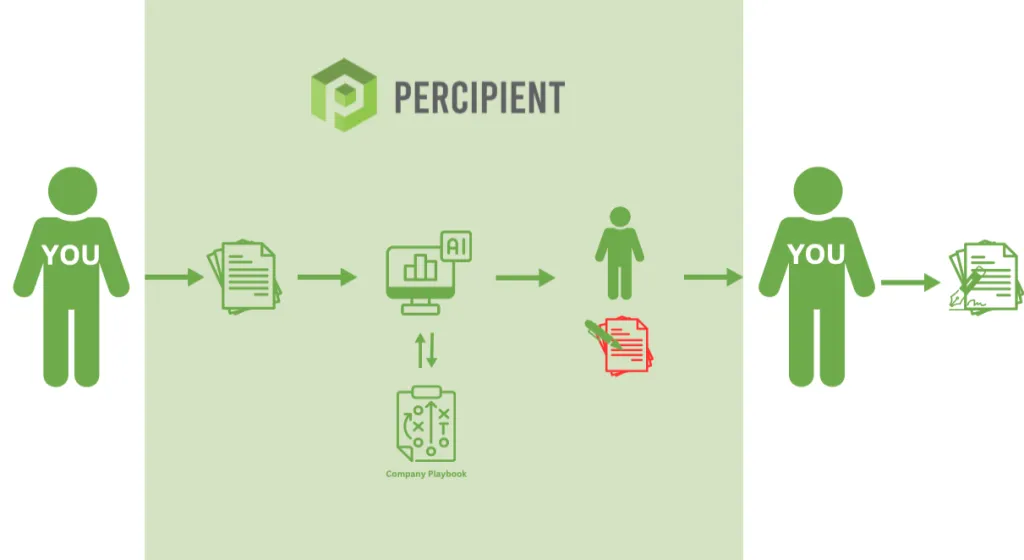
Percipient takes a different approach to contract review by blending AI technology with input from real legal experts.
It’s a solid option if you’re handling lots of contracts and need results that are both fast and accurate. You get the efficiency of AI with the added reassurance of human oversight, so nothing important slips through the cracks.

Unlike tools that rely solely on software, Percipient integrates a service component so that nuanced legal issues are addressed with care.
Their tailored onboarding process and collaborative feedback loop make it a standout choice for organizations looking for accuracy, efficiency, and a partner in their contract management process.
Best Features
- Tailored onboarding: Customizes the AI model based on your organization’s contract standards, clauses, and preferences.
- Human validation: Experienced legal professionals review AI outputs for accuracy and handle complex issues.
- Advanced AI redlining: Identifies clauses, flags risks, and suggests edits while extracting metadata for easy integration with contract management software.
- Collaborative feedback loop: Provides clear redlines and explanations, allowing your team to make informed adjustments.
Pros
- Combines AI efficiency with expert human oversight
- Customizable to align with unique organizational needs
- Ensures accuracy for high-stakes contracts
2. Lex Machina: Legal Analytics
Lex Machina helps you turn legal data into clear, actionable insights. It’s a go-to tool for litigation teams that want to spot trends, predict case outcomes, and better understand how judges or opposing counsel tend to operate.
Whether you’re with a law firm or part of an in-house team, it gives you the numbers and patterns you need to plan your next move with confidence.

Essentially, Lex Machina transforms complex legal data into easy-to-understand insights to give legal professionals an edge in both strategy and preparation.
Best Features
- Comprehensive case data: Provides insights into case outcomes, timelines, damages, and more.
- Judge and opposing counsel analysis: Offers detailed reports on patterns and tendencies, helping shape litigation strategies.
- Practice area modules: Tailored analytics for areas like intellectual property, antitrust, and employment law.
Pros
- Helps legal professionals make informed decisions based on real data
- Saves time by organizing complex legal information into actionable insights
- Covers a wide range of practice areas
3. CoCounsel: Generative AI
CoCounsel by Casetext is an advanced generative AI tool tailored specifically for the legal profession. Powered by OpenAI, CoCounsel is designed to handle a variety of tasks, such as drafting, reviewing, and summarizing legal documents with speed and accuracy.
It’s particularly useful for lawyers and legal teams who want to offload repetitive, time-consuming work while maintaining high standards of quality and compliance.

Best Features
- Document drafting and summarization: Quickly creates polished drafts and concise summaries.
- Legal question answering: Provides precise, AI-generated responses to legal queries based on relevant case law.
- Contract review: Identifies issues, inconsistencies, and missing clauses in contracts.
- Ease of integration: Seamlessly fits into existing legal workflows and tools.
Pros
- Saves significant time on document-heavy tasks
- Provides highly accurate, context-specific outputs
- User-friendly and accessible to all experience levels
Best Features
- Natural language queries: Search using everyday language without needing complex legal syntax.
- Comprehensive legal database: Access case law, statutes, and regulations across various jurisdictions.
- Highlighted key passages: Quickly identifies the most relevant sections of legal texts.
- Smart updates: Keeps you informed about new cases or changes in legal precedents.
Pros
- Simplifies legal research with intuitive, user-friendly tools
- Saves time with quick and accurate results
- Ideal for lawyers across different practice areas
What Does the Future of AI Look Like For Legal Professionals?
AI is already changing the way legal work gets done. You’ve probably noticed it in areas like contract review or research; it’s faster, more consistent, and taking a lot of pressure off day-to-day tasks. And this is just the beginning.
Some experts say we’ll start to see AI take over more entry-level tasks within the next few years. That might sound like a big leap, especially in a field that’s known for being careful with new tech. But here’s the thing: it’s not about replacing lawyers. It’s about giving you better tools to do your job.
AI can’t think like you do. It doesn’t have the judgment, creativity, or nuance that you bring to client work. What it can do is handle the tedious parts, so you can focus on strategy, advocacy, and real problem-solving.
Yes, there are still some things to figure out, like data privacy, compliance, and evolving rules, but firms that are open to these tools now are already a step ahead. If you’re thinking about where to take your practice next, this is the kind of shift worth paying attention to.
Let Percipient Modernize Your Contract Workflow
AI is no longer a future concept. It’s here, and it’s changing how legal teams get things done. By handling repetitive tasks like contract review and legal research, AI allows lawyers to focus on work that makes the biggest difference.
If managing contracts feels overwhelming or time-consuming, Percipient can make it easier. With their support, you’ll have more time to focus on what matters most. Ready to see how it works?
Contact Percipient today and take the first step toward smarter and more efficient legal workflows.
FAQs About AI Legal Tech
What is legal tech AI?
Legal tech AI refers to artificial intelligence tools that AI companies design to help legal departments with their work. These tools can handle tasks like reviewing contracts, conducting legal research, managing case data, and predicting case outcomes. They streamline repetitive tasks, save time, and improve efficiency, allowing lawyers and legal teams to focus on more complex and strategic work.
Will AI replace paralegals?
AI isn’t likely to replace paralegals entirely. While it can handle repetitive tasks like document review or research, it can’t replicate the critical thinking, problem-solving, and personal interaction that paralegals provide. Instead, AI is more likely to assist paralegals by taking over time-consuming tasks, allowing them to focus on higher-value work.
How is AI being used in the legal profession?
AI is used in the legal profession to automate and enhance a variety of tasks. It helps with contract analysis, legal research, e-discovery, and compliance monitoring. AI can also predict case outcomes using data analytics and draft documents quickly and accurately. By integrating AI, legal teams and even federal courts can save time, reduce costs, and provide better service to their clients.
Is AI difficult to integrate into legal workflows?
Not really. Most AI tools are designed to work alongside your existing processes, making the transition fairly straightforward. Many offer integrations with tools like document management systems or case management software, so they fit seamlessly into your workflow. Providers often include training and onboarding to help your team get comfortable with the technology. With a little setup, AI can quickly become a valuable part of your daily operations.